Common (or Harbour) Seals
 The smallest of out two native seals, and despite its name, there are fewer common seals in British waters than grey seals! Preferring to feed on fish and sand eels, and rarely taking crabs and other crustaceans, a full-grown adult common seal can reach up to 130 Kilos in weight.
The pups are born in the summer months, and because they can swim within an hour of being born, the common seal is able to give birth on small rocky islets that may be submerged between tides. Unlike grey seals, the pups are born with adult colouring and we are almost guaranteed sightings on all our trips.
 There are around 35,000 common seals in British waters, with the majority of these being found in Scottish waters. The species has suffered terribly over recent years from distemper, a disease that occurs sporadically and killed an estimated 18000 seals in 1988 alone, which is 50% of the current British population. This sparked concerted research into the disease, however it continues to be a problem still today.
Remember that a lone pup on the shore may not be abandoned. Monitor it from a distance, before contacting your local seal sanctuary.
Grey Seals
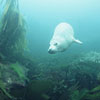 Half of the World’s population of Grey Seals live in British waters, mostly in the north and west.
Studies by the Sea Mammal Research Unit have found that their preferred food is sand eels, which comprises around 45% of the diet, and they supplement this with a wide variety of other fish. The main commercial fishing catch on the West Coast is crustaceans (prawns, lobsters, scallops etc.), which grey seal do not eat, and therefore there is no reason for conflict with the local fishing industry. A full-grown adult male will eat around 5 to 6 kilos of food a day, and may reach 2½ metres in length, and as much as 250 kilos in weight.
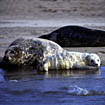 The pups are born in the autumn, and are a pale cream to white colour. Because the pups are fed on land by their mother (the cow) for around three weeks, they give birth on sandy areas above the tide line in large colonies (called ‘rookeries). The male seals (called ‘bulls’) come ashore a few days later, and fight for the right to mate with the cows. Each bull holds a small territory holding two to ten cows, which he defends aggressively. When the pups are about three weeks old they are abandoned by the cow, and have to fend for themselves.
Grey seals have suffered from persecution by man for many years. Various reasons, including their impact on fish stocks have been cited, and in the 1970’s plans to carry out culling at the rookeries were devised. Public concern against these culls was considerable, and sufficient pressure was raised that the culls were eventually abandoned.
 Dive Scotland